Books
How We Blame: A Theory of Moral Responsibility (Routledge 2025)
Congratulations to our Colleague Dr. Bana Bashour on the publication of her book "How We Blame: A Theory of Moral Responsibility" (Routledge 2025)!
https://www.routledge.com/How-We-Blame-A-Theory-of-Moral-Responsibility/Bashour/p/book/9781032522647?srsltid=AfmBOoqX3sLmBvKYs0kFIqJo4oAudsgvE-8Yxh3n86fUug_NJU3hGRSW
This book presents a naturalistic account of moral responsibility that is neutral on the metaphysics of free will. It engages with empirical literature in experimental philosophy and psychology and draws on real-life case studies to illuminate the author’s theory of moral responsibility.
The author argues that agency requires an understanding of moral responsibility attributions, which requires that one understands one’s intentional states and those of others. Further, she argues that a justified attribution of moral responsibility involves justified attributions of intentional states and justified perceptions of norm violations. This claim is novel because when moral responsibility is indexed to a particular onlooker, the discussion becomes one about whether a blamer is justified in attributing moral responsibility to the blamed. Another distinctive feature of the author’s account is that it makes room for cultural variability in our justifications of moral responsibility; those in different cultures may have different norms or expectations of one another. The first part of the book argues for a theoretical account of agency and moral responsibility while making distinctions between those and one’s theory of punishment. While justified attributions are interpersonal, theories of punishment are institutional and societal in nature. The second part of the book goes into the literature from empirical psychology and experimental philosophy on the nature of moral responsibility.
How We Blame will appeal to philosophers and psychologists interested in the issue of moral responsibility.
Articles
Aristotle’s Theory of Predication and the Status of Universal Non-substances in al-Kindī’s Epistle On the Quantity of Aristotle’s Books (Persuading and Transmitting in Classical Arabic Philosophy: Studies in Honour of Maroun Aouad, Brill 2026)
Congratulations to our Colleague Dr. Emma Gannagé on the publication of her new article "Aristotle’s Theory of Predication and the Status of Universal Non-substances in al-Kindī’s Epistle On the Quantity of Aristotle’s Books" (Persuading and Transmitting in Classical Arabic Philosophy: Studies in Honour of Maroun Aouad, Brill 2026)!
https://brill.com/display/book/9789004742048/BP000003.xml
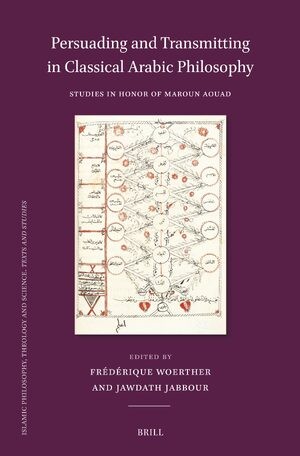
Why does Yaʿqūb b. Isḥāq al-Kindī (d. ca 873), at the beginning of his treatise On the Quantity of Aristotle's Books and What is Necessary for the Attainment of Philosophy, highlight Aristotle's theory of predication, emphasizing the parallel, in terms of synonymous predication, between secondary substances and the other categories, and particularly the category of quality? This parallel, in fact, blurs the lines between the secondary substance and all the other categories, each of which being a universal predicated synonymously of the particulars that fall underneath it. What is at stake is the status of the categories as universal non-substances. If the parallel drawn by al-Kindī between secondary substances and categories were to be understood strictly, then we should consider that “just as the category of substance contains both universals such as man and animal, and particulars such as this man, so the category of quality contains both universals such as pallor (whiteness) and color as well as particulars such as this pale (this particular white)." Having said that, the secondary substances depend on the primary substances for their existence. However, al-Kindī is careful not to mention this dependence and to restrict the parallel to the synonymous predication between genera and species that is common to the substance and the non-substance categories. Is he reversing the ontology of the Categories that exhibits the ontological dependence of universals on particulars which is ultimately grounded in the primary substance? Moreover, in conflating paronymy and homonymy, and emphasizing the derivation of the particular “this white" from the universal “whiteness," he seems to give a preeminence to the quality over the qualified, that is, to the abstract and intelligible form over its concrete instantiations.
A Peircean Account of Value-Influence in Science (in Histories of the Value-Laden Ideals of Science: Philosophical Perspectives, Routledge 2026)
Congratulations to our Colleague Dr. Mousa Mohammadian on the publication of his chapter, “A Peircean Account of Value-Influence in Science,” in Histories of the Value-Laden Ideals of Science: Philosophical Perspectives, edited by Gábor Bíró and Adam Tamas Tuboly (Routledge 2026)!
https://doi.org/10.4324/9781003716891-3
The chapter develops a Peircean account of value-influence in science that challenges some central tenets of the value-free ideal. Drawing on C. S. Peirce’s conception of scientific inquiry as a socially organized, truth-seeking practice grounded in experience, Mohammadian identifies two legitimate forms of value-influence in science. First, he argues that value-driven doubt of scientific theories is not only permissible but, under certain conditions, necessary. He articulates four Peircean constraints on such doubt: it must be grounded in collective experience, raised by competent members of the scientific community, supported by properly formed background beliefs, and remain responsive to evidence and reasoning. Given Peirce’s pragmatist theory of truth, unresolved genuine doubt precludes the attainment of truth; permissible value-driven doubts must therefore be addressed if scientific inquiry is to achieve its aim. Second, the chapter argues that the suggestion of value-laden hypotheses constitutes a further legitimate mode of value-influence in science. Finally, drawing on Peirce’s Pragmatic Maxim and his moral cognitivism, Mohammadian argues that value-laden scientific inquiry can itself function as a mode of scientific inquiry into values, providing empirical and epistemic resources for evaluating value judgments.
Avicenna’s flying man in Einstein’s elevator: what does the flying man know? (British Journal for the History of Philosophy - 2026)
Congratulations to our Colleague Dr. Mousa Mohammadian on the publication of his new article "Avicenna’s flying man in Einstein’s elevator: what does the flying man know?" (British Journal for the History of Philosophy: 2026)!
https://doi.org/10.1080/09608788.2025.2551585
In Avicenna’s Flying Man Thought Experiment (FMTE), we are invited to imagine someone who suddenly comes into existence, flying in the air, in a state of complete sensory deprivation, and without any memory. The Flying Man (FM) is claimed to be aware of something while he is unaware of his body. What exactly FM is aware of has been a topic of some debates. To answer this question, we study FMTE through two lenses: the essence-existence distinction and the distinction between the inside observer and the outside observer in thought experiments, highlighted by Einstein in his elevator thought experiment. Relying on these distinctions, we argue against the claim that FM is aware of the essence of his self by showing that it is inconsistent with major aspects of Avicenna’s philosophical psychology, metaphysics, and epistemology. We defend the view that FM is only aware of the existence of his self. It is commonly suggested that if this view is correct, Avicenna commits a fallacy in using FMTE to argue that FM’s self is not FM’s body. We argue against this position and show that within the Avicennian framework, FMTE is a sound argument.
Theoretical Virtues, Truth, and the Epistemic Aim of Scientific Theorizing (Philosophy of Science - 2026)
Congratulations to our Colleague Dr. Mousa Mohammadian on the publication of his new article "Theoretical Virtues, Truth, and the Epistemic Aim of Scientific Theorizing" (Philosophy of Science: 2026)!
https://doi.org/10.1017/psa.2025.10094
I argue that the epistemic aim of scientific theorizing (EAST) is producing theories with the highest possible number and degree of theoretical virtues (call this “TV-EAST”). I trace TV-EAST’s logical empiricist origins and discuss its close connections to Kuhn’s and Laudan’s problem-solving accounts of the aim of science. Despite TV-EAST’s antirealist roots, I argue that if one adopts the realist view that EAST is finding true theories, one should also endorse TV-EAST. I then defend TV-EAST by showing that it addresses the challenges raised against using “the aim of science” metaphor and offers significant advantages over the realist account.
Thoracoabdominal normothermic regional perfusion: Is it ethical?
(Monash Bioethics Review - 2025)
Congratulations to Dr. Caner Turan on the publication of his new article "Thoracoabdominal normothermic regional perfusion: is it ethical?" in Monash Bioethics Review (2025)
https://link.springer.com/article/10.1007/s40592-025-00229-2
Thoracoabdominal normothermic regional perfusion (TA-NRP), a new method of controlled donation after circulatory death, seems to provide more and better organs for patients on organ transplant waiting lists compared to standard controlled donation after circulatory death. Despite its benefits, the ethical permissibility of TA-NRP is currently a highly debated issue. The recent statement published by the American College of Physicians (ACP) highlights the reasons for these debates. Critics’ main concern is that TA-NRP violates the Dead Donor Rule. This paper presents an ethical analysis of the objections raised by the ACP against TA-NRP and argues that TA-NRP is not only morally permissible but also morally required where it is financially and technically feasible. To support this conclusion, the concepts of ‘resuscitation,’ ‘intention,’ ‘irreversibility,’ ‘permanence,’ ‘impossibility,’ and ‘respect’ in the context of TA-NRP are explored. Additionally, the ethical permissibility of this procedure is evaluated through the lenses of Utilitarianism, Kantianism, the core principles of bioethics, and the Doctrine of Double Effect. This ethical analysis demonstrates why the ACP’s objection lacks a solid moral foundation and conflates moral and legal considerations. This paper also argues that extra measures are needed to ensure the moral permissibility of TA-NRP, emphasizing the importance of informed consent, additional brain blood flow and activity monitoring, and a contingency plan to abort the organ procurement process if a sign of morally relevant brain activity is detected.